
Grow guides
What’s wrong with my plant, and how to do each job, for vegetables, herbs and fruit.
Nothing matches. Try a crop name or what you can see, like “holes” or “white”.
What’s wrong with my plant?
Find the photo that looks like yours.
Pests
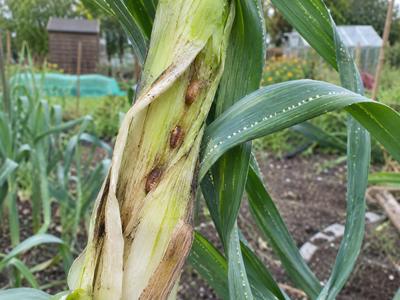 Allium leaf minerTwisted leek and onion leaves with white dots
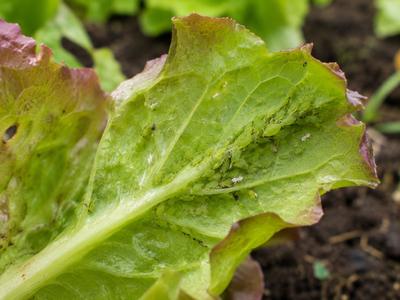 AphidsSmall insects under the leaves
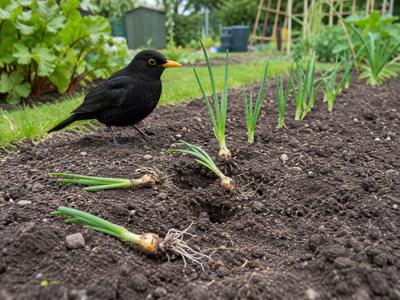 BirdsOnion sets pulled up and fruit pecked
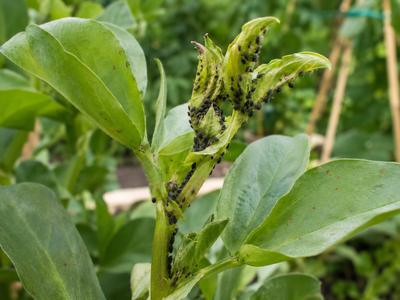 BlackflyBlack insects on broad bean tips
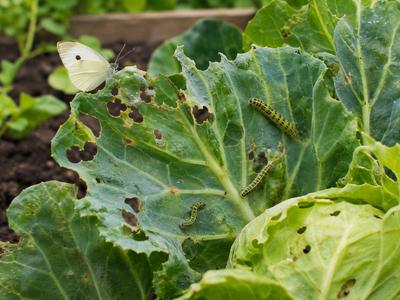 Cabbage white caterpillarsCaterpillars eating cabbage leaves
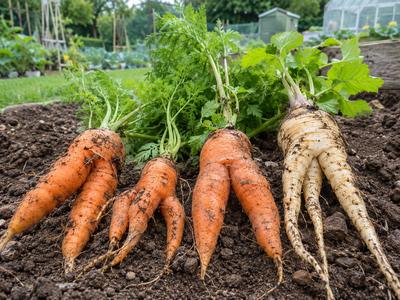
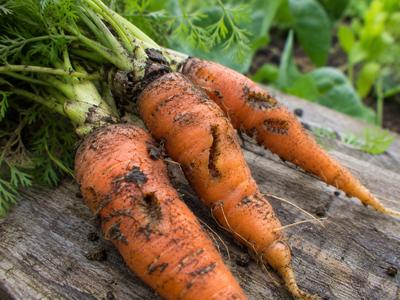 Carrot flyBrown tunnels in carrots
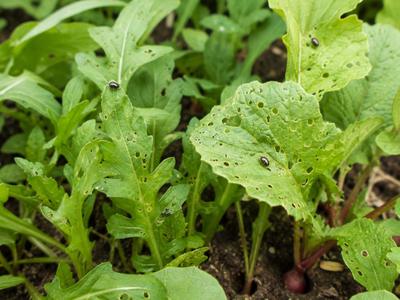 Flea beetleTiny round holes in leaves
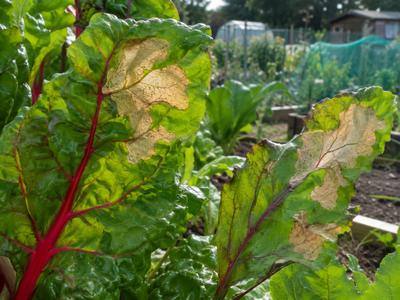 Leaf minerBrown blotches on chard and beetroot leaves
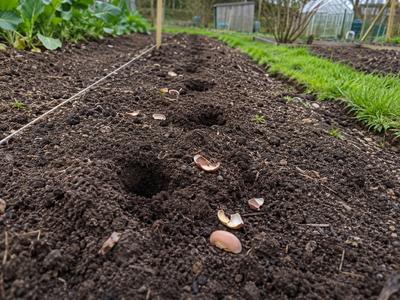 MiceBean and pea seeds dug up
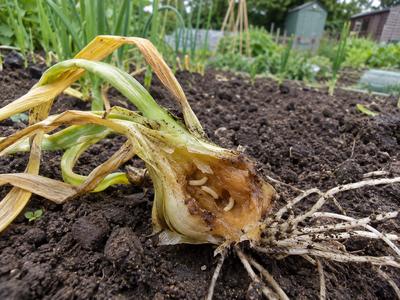 Onion flyOnions wilting, with maggots in the bulb
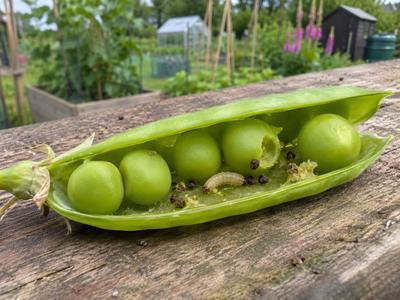 Pea mothCaterpillars inside pea pods
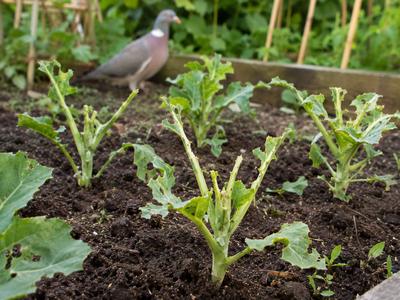 PigeonsCabbage leaves pecked to the stalks
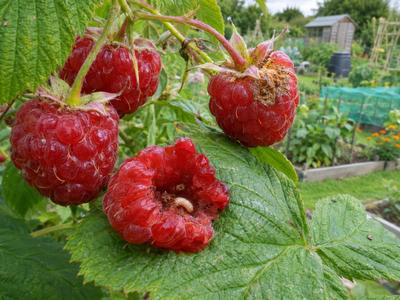 Raspberry beetleGrubs inside raspberries
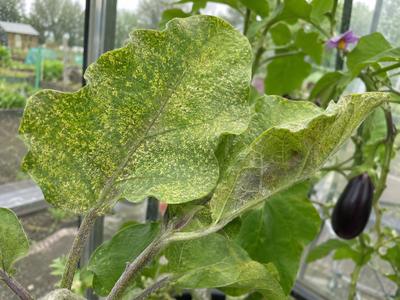 Red spider miteSpeckled leaves with fine webbing
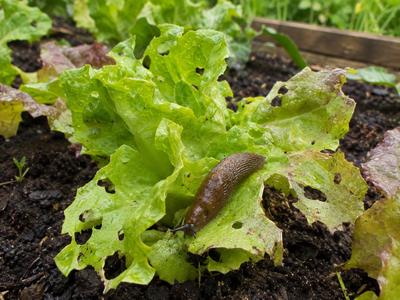 SlugsHoles eaten in leaves overnight
Diseases
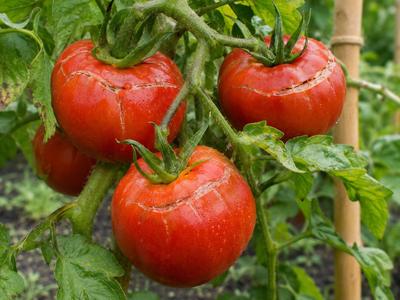
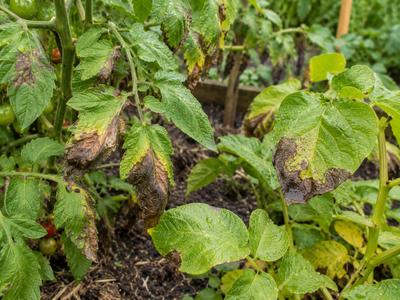 BlightBrown patches on potato and tomato leaves
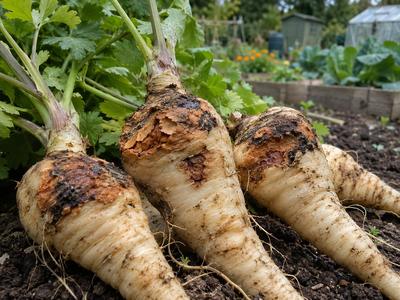 CankerBrown or black patches on parsnips
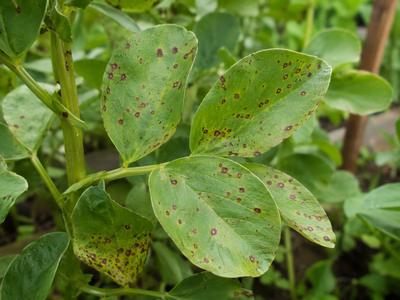 Chocolate spotBrown spots on broad bean leaves
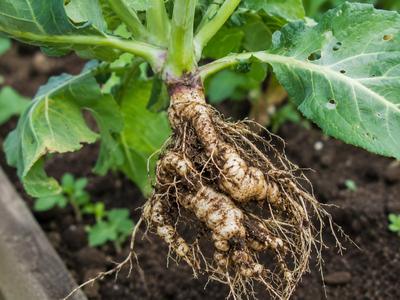 Club rootCabbages wilting, with swollen roots
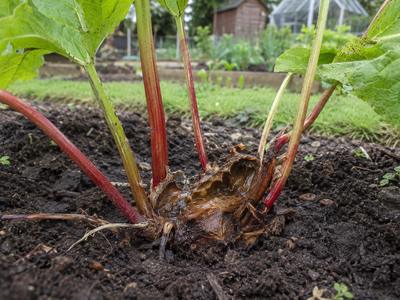 Crown rotRhubarb crown going soft and rotten
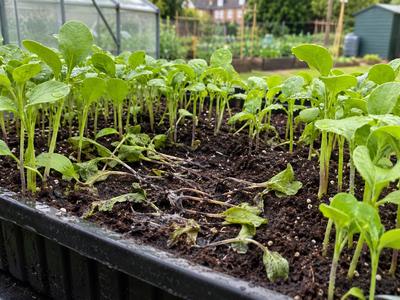 Damping offSeedlings collapsing at soil level
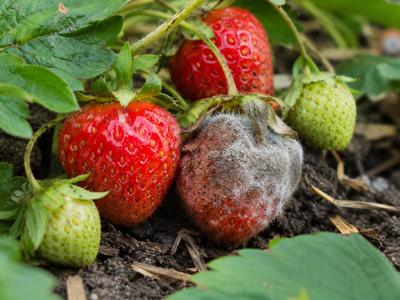 Grey mouldFuzzy grey mould on strawberries
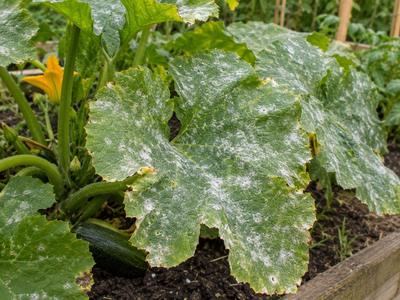 Powdery mildewWhite powder on courgette and squash leaves
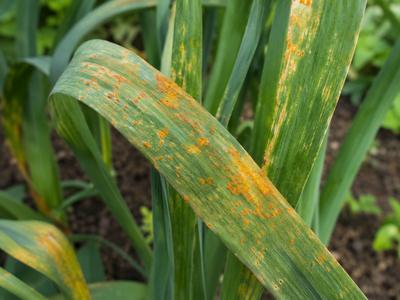 RustOrange spots on leaves
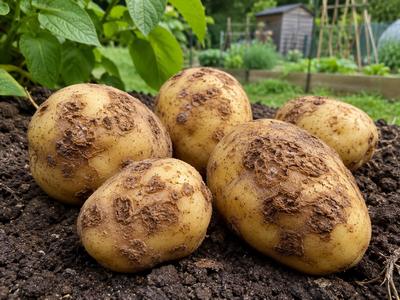 ScabRough, corky patches on potato skins
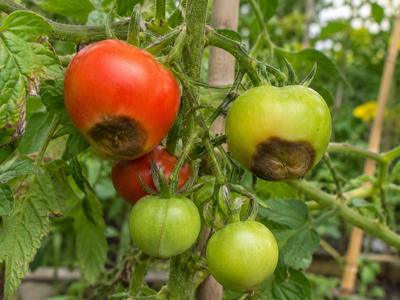
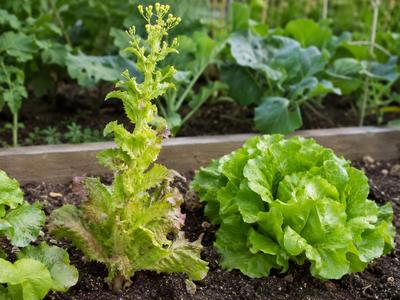
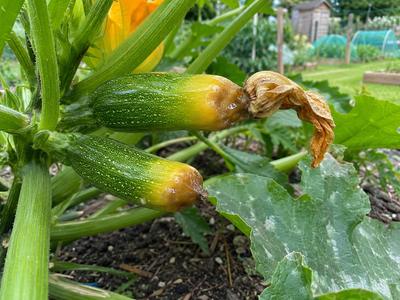
Growing troubles
How-tos
Every job, in the order the year brings them.
Sowing
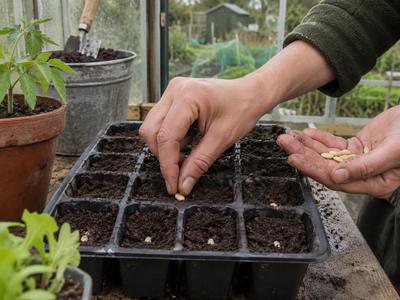 Sowing in modulesOne or two seeds per cell of a module tray under cover, so each plant gets its own root ball and moves out without a check.
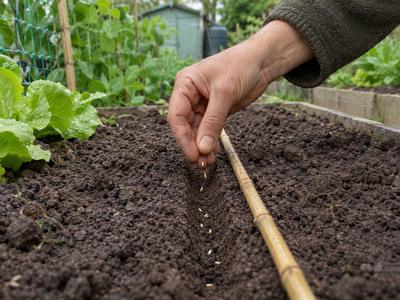 Sowing in a drillA shallow straight groove drawn with a cane or hoe, watered first, seeds spaced along it, then covered lightly.
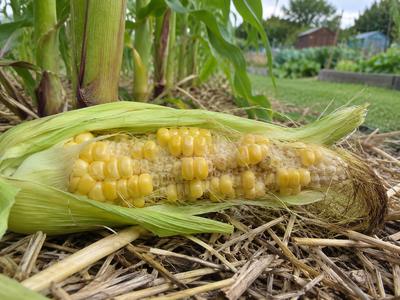
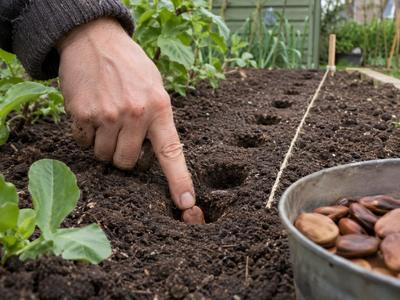 Sowing big seedsBeans, peas, squash and sweetcorn: push 1 or 2 seeds into each spot at the final spacing, about twice as deep as the seed.
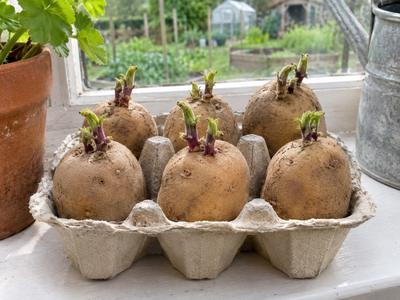 ChittingStanding seed potatoes in a light, cool place for a few weeks so short green shoots grow before planting.
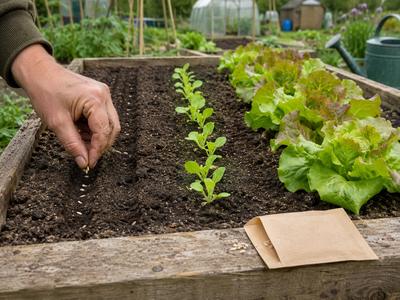 Sowing little and oftenA short row every 2 or 3 weeks instead of one big sowing, so there is always some ready and none wasted.
Raising plants
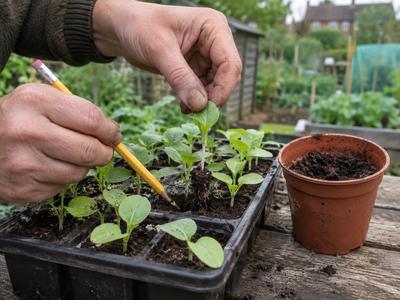 Pricking outMoving seedlings from a tray into their own pots once they have their first true leaves, holding them by a leaf, never the stem.
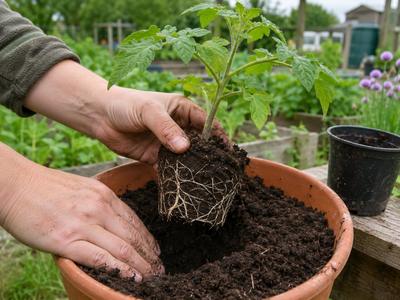 Potting onMoving a young plant to a bigger pot when roots show at the bottom, so it keeps growing until it can go out.
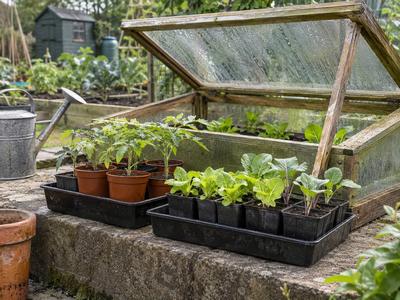 Hardening offGetting plants raised under cover used to outdoors over 7 to 10 days: out in the day, in at night, then out for good.
Planting
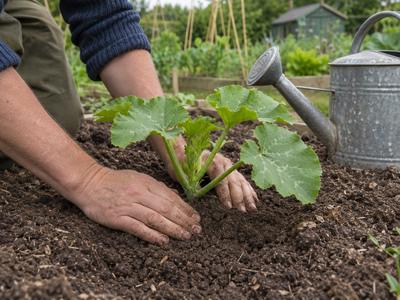 Planting outWatering first, planting at the right depth and spacing, firming in and watering well at the base.
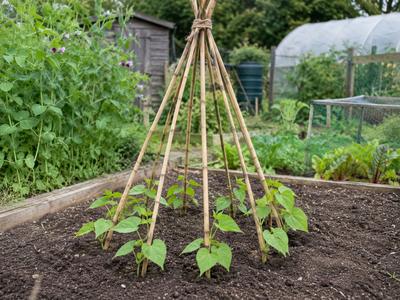 Climbing supportsCanes tied into a wigwam or a double row for climbing beans and peas, one plant at each cane.
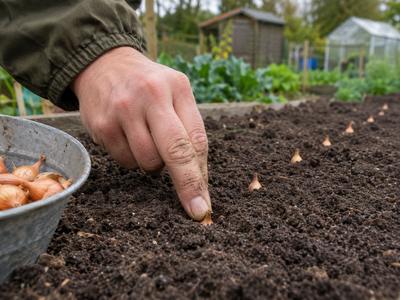 Planting sets and clovesPushing onion sets, shallots and garlic cloves into the soil with the tip just showing or just under.
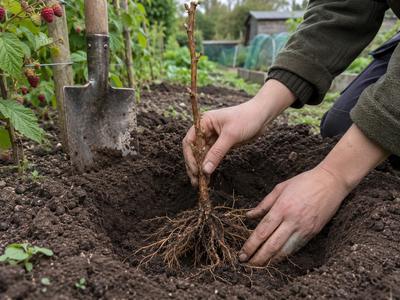 Planting fruitPlanting canes, crowns and bushes while dormant, at the right depth, with a good soak and a mulch.
Looking after
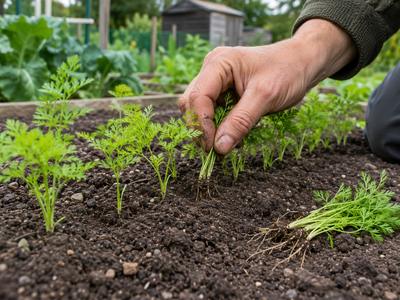 ThinningPulling out the extra seedlings so the rest have room, best done after watering and in two goes.
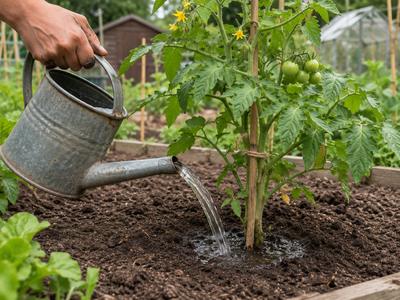 Watering wellA good soak at the base every few days beats a sprinkle every day. Morning is best, and leaves stay dry.
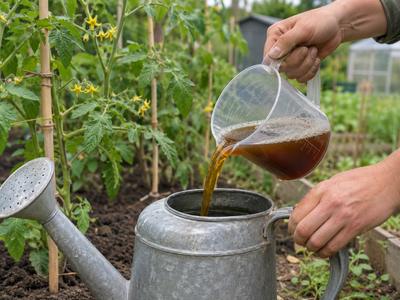 FeedingA liquid feed every week or two for hungry crops in fruit; high potash for fruit and flowers, nitrogen for leaves.
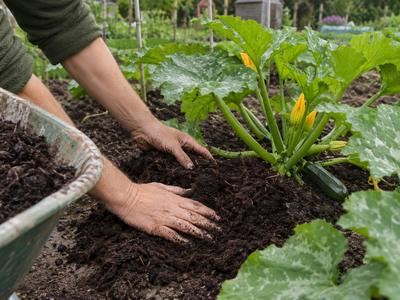 MulchingA layer of compost, straw or bark on damp soil to hold water in and keep weeds down.
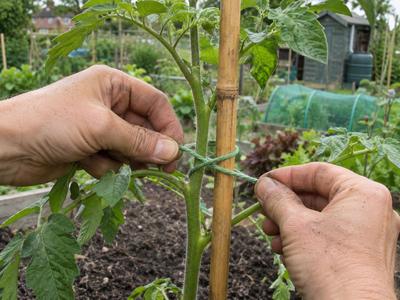 Staking and canesA cane or stake put in at planting time, with soft ties in a loose figure of eight as the plant grows.
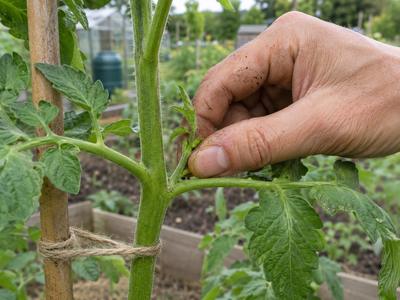 Pinching out side shootsSnapping off the shoots that grow where a leaf meets the main stem, so cordon tomatoes put their energy into fruit.
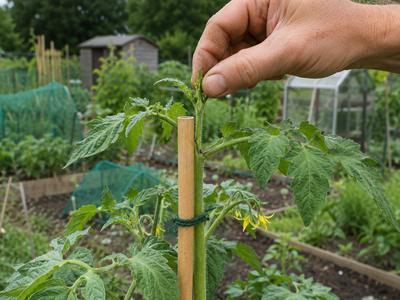 StoppingPinching out the growing tip: to make a plant bushier, to stop it at the top of its support, or to let fruit ripen.
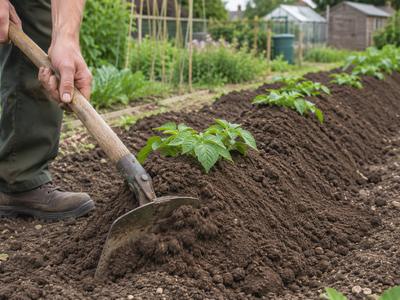 Earthing upDrawing soil up around the stems as the plant grows: keeps potatoes dark, blanches leeks and celery, steadies sprouts.
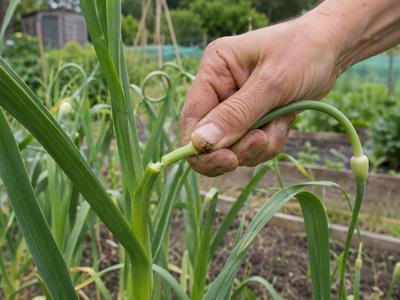 Removing flower stalksSnapping off flower stalks on garlic, onions and rhubarb so the plant puts its energy into the part you eat.
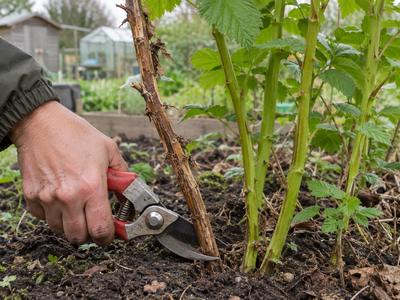 Pruning raspberriesCutting out canes that have fruited: summer kinds after fruiting, autumn kinds all to the ground in late winter.
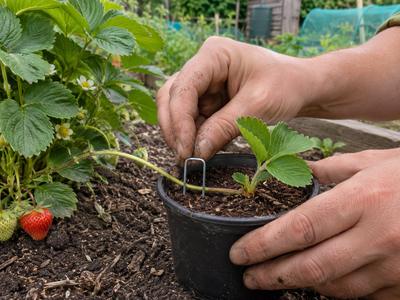 Strawberry runnersPinching off runners so plants crop well, or pegging a few down to make new plants.
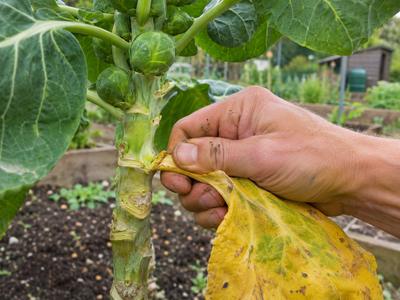 Taking off yellow leavesSnapping off old yellowing leaves at the base of brassicas so air gets round the plant and slugs have nowhere to hide.
Protecting
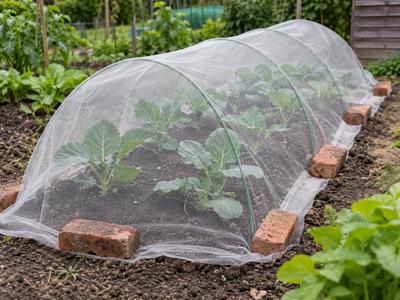 NettingFine mesh or netting held off the leaves on hoops, to keep butterflies, pigeons, carrot fly or birds off.
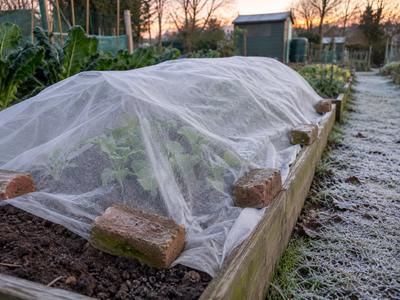 Covering for frostFleece or a cloche over tender plants on a cold night, taken off in the morning.
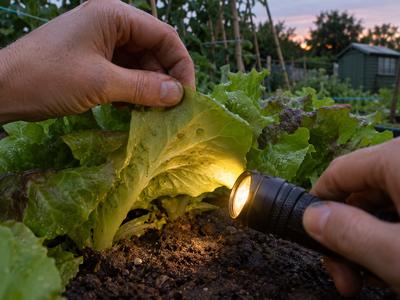 Slug checksChecking under leaves and around young plants on damp evenings, and protecting seedlings in their first weeks.
Harvest and store
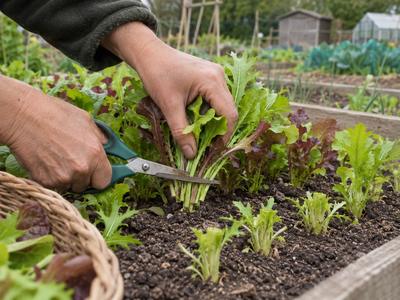 Cut and come againCutting leaves 3 to 5 cm above the base so the plant grows back for more harvests.
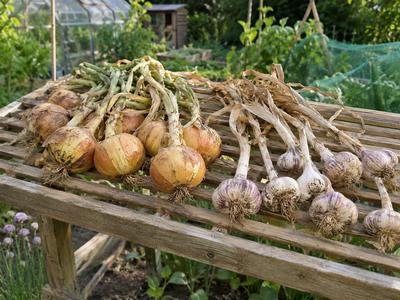 Drying and storingLeaving onions, garlic and squash to dry in the sun or somewhere airy before storing them somewhere cool and dry.
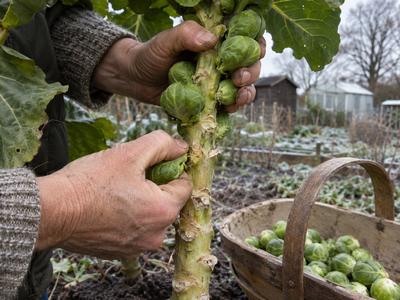 Harvesting sproutsPicking sprouts from the bottom of the stem up, a few at a time, from autumn through winter.
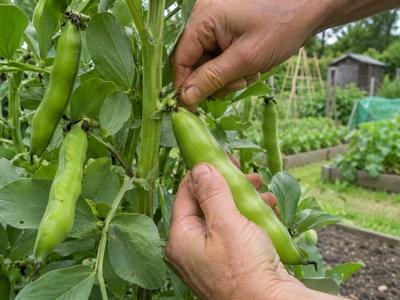 Harvesting broad beansPicking pods while the beans are young and tender, every few days so the plants keep cropping.
Growing guides by crop
When to plant, then how to grow it, for each crop.
Fruiting


Roots


Leaves


Beans and peas


Onion family


Brassicas


Herbs


Fruit


Every job, at the right time
Bia turns these guides into reminders for the crops on your plot, timed for your town. Free for 2 months.
 App StoreComing soon